


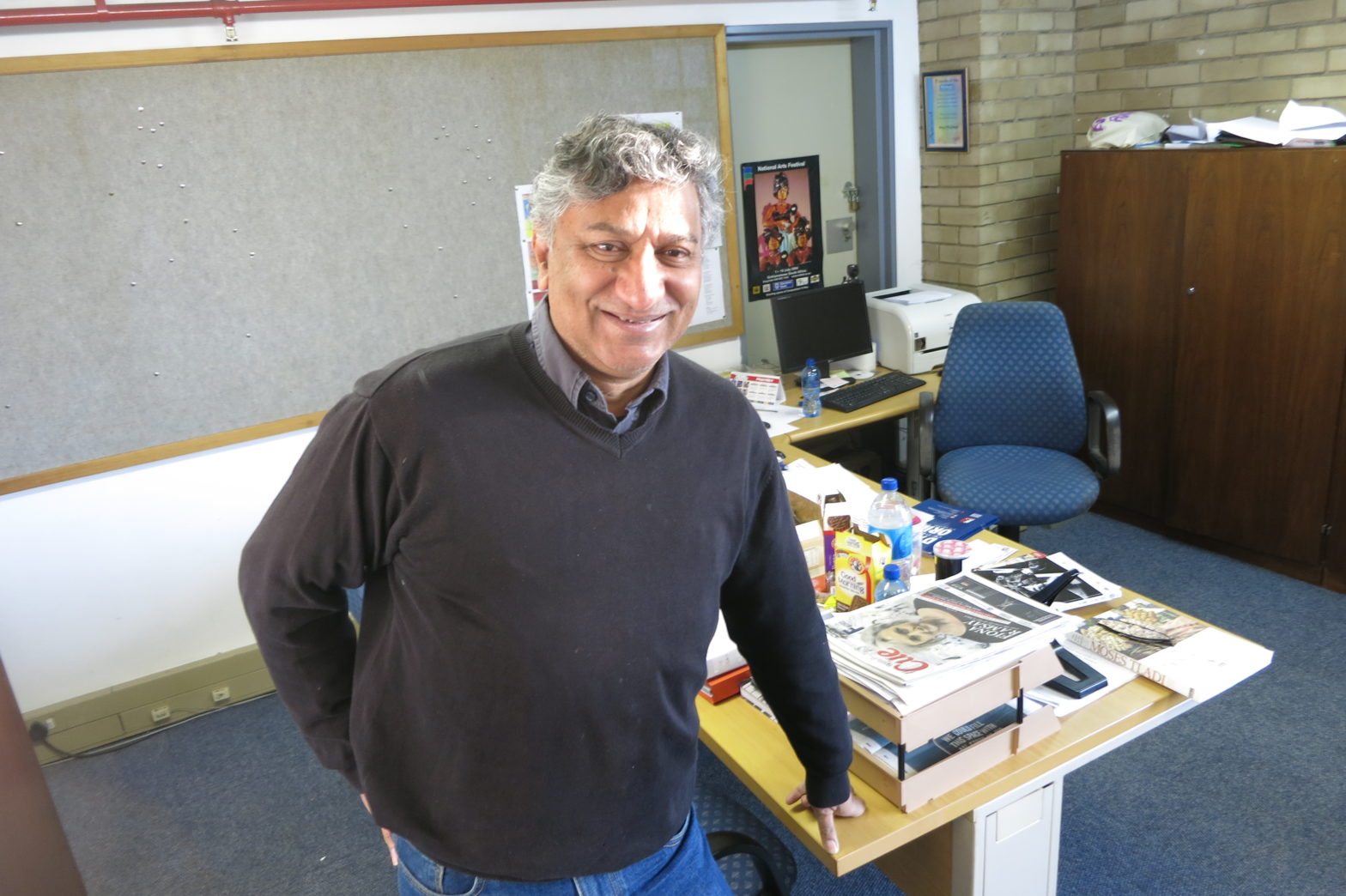
Careful, that art is a weapon in your hand! The Ismail Mahomed exit interview
ART and artists have the power to influence South African society at this time of immoral, corrupt politics.
Artists are once again forced to use culture “as a weapon” as they did during the anti-apartheid protest theatre years to protect the democracy and to fight for the original promise of liberation, said outgoing National Arts Festival creative director Ismail Mahomed.
Under his eight-year watch, the festival has earned the Eastern Cape almost R3-billion at R349-million a year, according to research.
Mahomed heads off soon to take up the position of CEO of the Market Theatre in Johannesburg, which together with The Space theatre, produced volcanic anti-apartheid works in the 1970s and 80s.
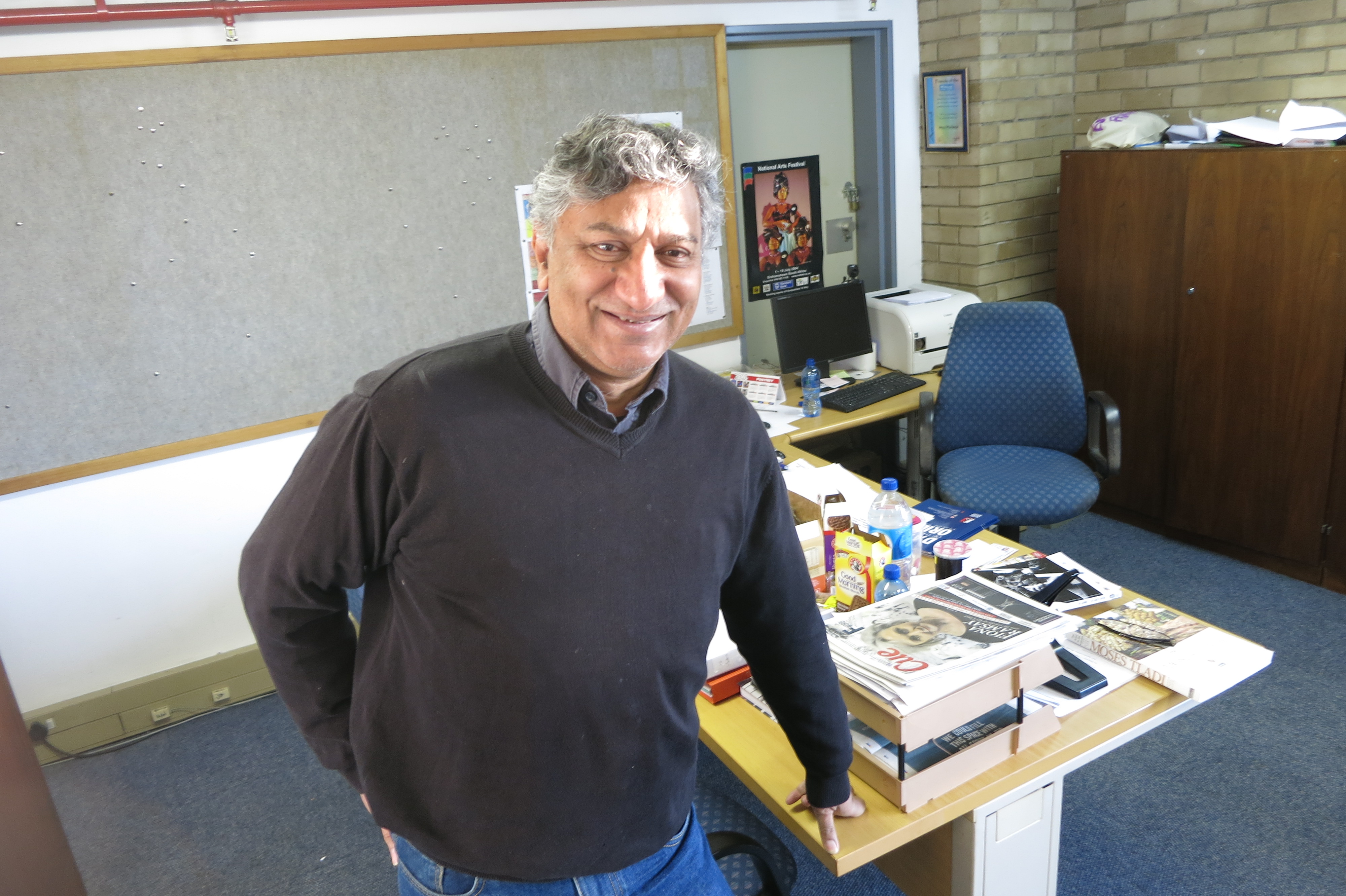
In an exclusive interview in mid-festival in his dungeon-like offices in the Monument at 7am on Tuesday, he reflected on his “full journey” through 26 festivals and finally, the perspective gained from his perch as one of the nation’s leading creative directors.
The festival was born 42 years ago out of the white academic and community, through the efforts of liberal Rhodes English professor Guy Butler and his journalist fundraiser, Thelma Neville, who on July 23 celebrates her 100th birthday in the national 1820 Settler Monument building she raised the money to build.
Mahomed recalls being the only person of colour in the auditorium back in the 80s.
But artists, facing a repressive regime, drove the festival to a new and radical place filled with new black voices and visions, a space he says becomes, for 11 days of the year, the home democratic South Africans desire.
As protest theatre took hold, and he recalled watching white artists challenging conscription into the SADF in the 80s in their theatre pieces, “but when I was at the jazz festival, I felt like I was in a different festival. The festival was a place of wonderful contradictions.
“I was attracted to the volatility and power of the Fringe which, as a space, was an essential part of the struggle for works, pieces like Township Boys.”
The 5pm free daily Sundowner concert, where artists produce snippets from their shows in the Monument’s cavernous fountain court, was “one of the most democratic spaces in Grahamstown, where people from all walks, from the rich to pauper could sit side by side.”
Festival in the 90s was a celebration of democracy, but he found the art “boring. We had lost that powerful crutch of protest and were telling stories of reconciliation which were superficial. We were not telling our own stories.”
His successor, still being chosen, would inherit a free-access Fringe which had the potential of once again grappling with looming state censorship which, he says, is starting to “stick its claws deep into society”.
It was up to artists to once again take up the call of the previous generation of of 70s and 80s artists to use “culture as a weapon of struggle. The 90s was about celebration, but artists did not own it. Now we are seeing artists stepping in to take ownership of our democracy.”
Shows such as Secret Ballot, OoMasisulu, Ruth First: 117 Days and As Ever, Bessie, reflected this desire to exercise rights to freedom of expression and speech enshrined in the constitution at time when “moral leadership is sadly lacking”.
He questioned whether some of the politicians attending festival with blue lights flashing “are having a party or have come to keep their ears close to the ground and hear the rumblings. They recognise the power of artists to influence and change whole societies.
“We are a nation still searching for the possibility of realising the dream that was promised, but we have new obstacles” such as pervasive corruption.
Festival artists, audiences and funders were seeking answers to issues of transformation out of this trap.
Work at the festival has always been dangerous, edgy, and the creative space provided has to be protected vigorously.
However, he cautioned that artists had to work hard at recovering and reimagining “our distorted histories. Until then, we will struggle to build a future (we desire).” He was irked by the claims that political and social anniversaries, such as the 1956 August 9th women’s march to Pretoria were being”celebrated” in the programme. “It’s more about women owning the space. Anniversaries are a catalyst for inspiration. We need to look beyond the women’s march and look at other aspects such as 70 years ago when Afrikaner women marched to Pretoria to protest about soldiers in war, about the role of women in running the Black Sash, the Detainee Parent Support Committees of the 80s, the Women in Peace organisation, and lately the role of women in the (hashtag) disruption movement.”
Turning to the Eastern Cape he was pleased with National Arts Festival-supported growth in the arts economy down in Nelson Mandela Bay and, generally, there had been some “wonderful and exciting development among artists”.
But he warned against “vanity projects” such as the stalled Hamburg arts retreat centre which he said had been set up without tapping into the experience and skills offered by the festival.
“We have no connection. I told them you are creating a wet dream. Vanity projects do not build a nation,” he said.
He said he had achieved all the goals he had set himself when he took on the festival directorship in 2008 and explained that the public and media obsession with annual ticket sales was based on a fear that the power and gift of the festival — “to move, shake and change us”, would somehow be taken away.
However, the only real fundamental threat was one of removal forced by the inability of local government to provide water and other infrastructure.
He said he had raised the water issue on social media three years ago to little effect.
He thanked the festival team upon whose shoulders he had stood.
* Ismail will be replaced by a yet-to-be announced executive producer who will bring to life a festival arts programme designed and curated by sub-committees 0f the festival’s artistic committee. - mikel@dispatch.co.za