


In Limbo: What if the internet could dream of itself?
In Limbo (2015) is a feature-length documentary film produced and directed by Antoine Viviani.
The film takes us on a journey into the internet, exploring its networks and systems while questioning notions of data as knowledge, surveillance and digital remembering. The computer is presented as a form of alternative memory, true memory so to speak. True memory is photographic, clear, and has potential for total recall whereas bio-memory (human memory) tends to reference specific feelings, emotions and events – it is often hazy and prone to error. Bio-memory deteriorates with age while true memory strengthens through time, as more and more bits of data are added.
The film is essayistic and lyrical, taking us through the most pressing questions of what it means to be human in the digital age. What makes us human? Why are we here? Why do we have an urge to see ourselves represented? What is memory? How do we define consciousness?
The opening scene presents three possible definitions for the phrase, ‘In Limbo’, beginning with a literal definition of limbo as a netherworld, neither heaven nor hell, followed by a figurative definition alluding to that which is abandoned, forgotten and on hold. The final definition is one employed in computer science, defined as data erased from a system, but not yet deleted from its storage media. These three divergent readings capture the scope of the film’s concerns.
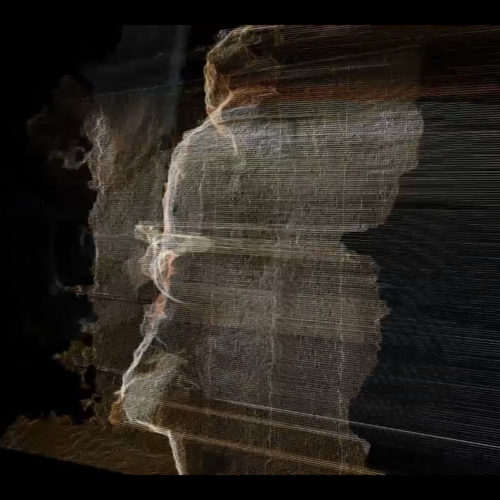
Guided by the voice of the narrator, Nancy Huston, the film lends itself as a poetic, philosophical and self-reflexive inquiry into how memory is formed, stored and accessed. This mode is interrupted through interviews conducted with Ray Kurzweil, Gordon Bell, Brewster Kahle, Laurie Frick and Cathal Gurrin (among others) rendered as digital waves connecting, to form the shape of the person speaking. This visual element adds an air of intrigue and expectation.
In Limbo is balanced in its representation and exploration of these difficult questions. It points out the dangers of a society obsessed with data while also showing us ways in which the internet adds to our full experience of the world. The suggestion is that the physical world is not enough, that a deeper and more intricate world exists through bits and bytes. This suggestion of the internet as a potentially fruitful place is particularly evident in the following scene:
An elderly man is using a computer, presumably for the first time. An assistant asks him what he is interested in. “Diving” he responds. The assistant helps him type the word into a search box telling him that he can also search for images of diving. D……I…..V……I….N….G. The process is long and arduous but finally, the results emerge on the screen. In that moment, the old man’s face lights up. His response “Ah, yeah. Wow” captures his awe and excitement. Urged by the assistant to click to see more images, the old man responds; “I prefer to stay here”. And he does. This scene is particularly beautiful because it actively works against the generally accepted narrative of the internet as fast, harmful and overwhelming. It reminds us that there are parts of the internet where we too can say; “I prefer to stay here”.
It is also possible to read In Limbo as a manifesto for digital memory albeit one that is not tightly held.
The writers draw on various quotes from Herbert George Wells’ collection of essays; World Brain. Wells describes his vision of a new and synthetic world encyclopedia that could assist world citizens in their quest for world peace. Wells declares; “We do not want dictators, we do not want oligarchic parties or class rule, we want a widespread world intelligence conscious of itself…” In the film, this phrase is read over a lightly textured melody urging us to further question; what makes (human) intelligence? what would happen if human intelligence were embedded into a machine? Would the machine become an extension of man?
Watch it here
Produced, written and directed by Antoine Viviani
Written with Jérémy André, Alain Damasio, Léa Todorov, Bojina Ponayatova
Voice over: Nancy Huston
Featuring: Gordon Bell, Cathal Gurrin, Raymond Kurzweil, Kevin Warwick, Paul Miller, Laurie Frieck, Liesl Capper, George Dyson
Editing: Pierre-Alain Giraud, Lucas Archambault
Sound editing and sound mixing: Raphael Hénard, Pierre Bariaud